
Oh, the simple pleasure of a sweet, creamy, frozen dessert.
While two of the most popular options, gelato and ice cream, may appear to be one and the same, they’re not. Sure, they’re both made with a base of milk, cream, and sugar that’s churned by machine or hand, but that’s where the similarities end.
Ice cream typically has a higher ratio of cream to milk, which results in a higher fat content than gelato. It also has a fluffy texture because it’s churned at a fast speed, while gelato, which is churned slower and has more milk than cream in its base, is often described as dense, even elastic.
It’s worth noting that these are generalizations. The ways ice cream and gelato are made vary from region to region around the world—although, technically, there’s a legal definition for what constitutes ice cream in the US and gelato is the Italian word for ice cream.
Keep reading. There’s even more to learn before picking your next dessert.
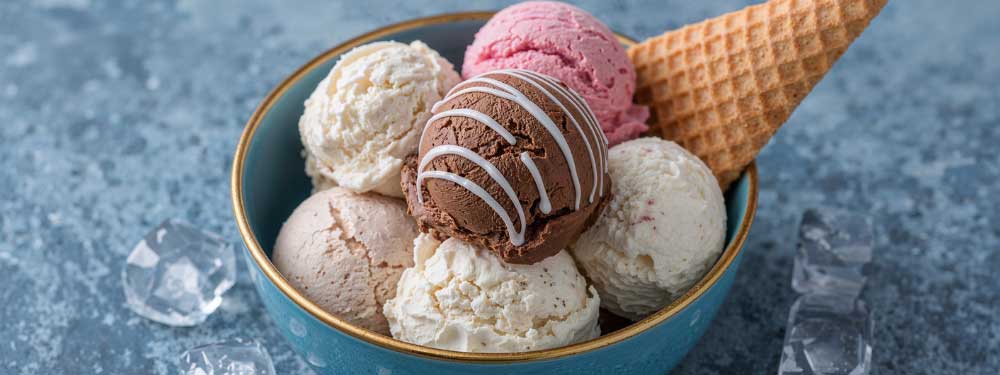
What is ice cream?
Ice cream’s base generally consists of milk, heavy cream, sugar, and sometimes eggs and/or egg yolks. Ice cream, as many of us know it, usually does not include eggs, while custardy French-style ice cream incorporates egg yolks into the base.
According to the US Food and Drug Administration, ice cream must contain at least 10% milk fat by weight. That said, ice cream recipes vary widely. Most brands you’ll find in your grocery store have a fat percentage of 14 to 25%. (We’re referring to traditional hard ice cream. Soft-serve ice cream contains 3 to 6% milk fat.
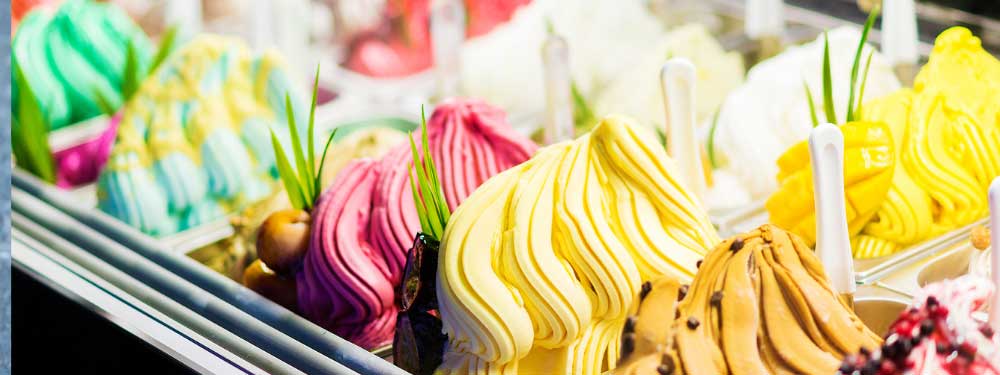
What is gelato?
Gelato’s milk fat content usually runs around 4 to 9%. That, combined with a slower churning process that introduces less air, yields a denser frozen treat than ice cream.
Traditionally, the base does not include eggs, but it can. Gelaterias also tend to serve their gelato 10 to 15 degrees Fahrenheit warmer than ice cream is often served. This contributes to gelato’s soft, silky texture. It also prevents cold temperatures from muting the palate, which is why gelato is considered a better showcase for delicate and complementing flavors, while ice cream favors simple and rich flavors.
The different fat content also has something to do with this. Fat coats our tongues, which makes it harder for our tastebuds to detect nuances in flavor. Since gelato contains less fat and more sugar than ice cream, its flavors can seem more pronounced.
In conclusion, there’s no wrong answer to the question, “Gelato or ice cream?”